Thursday, December 29, 2011
Meeting with US Ambassador to Singapore, David Adelman

My meeting
with US Ambassador Adelman was a great way to begin my Singapore explorations.
Ambassador Adelman was appointed to this position in 2010. Ambassador Adelman has spent most of his
career in the private sector. Prior to his appointment, he was a
businessman, lawyer, university instructor and member of the Georgia Senate.
Since his arrival in Singapore, Ambassador Adelman has made great progress
further developing and managing the relationship between the United States and
Singapore by actively engaging with government leaders, businesses, media, and
students. Under his leadership the U.S. engagement in Singapore has
strengthened its position as one of America’s anchors in Asia.
During our
meeting, Ambassador Adelman and I discussed US relations between India and Singapore, among many topics. It was very interesting
to hear this take from a US official, particularly right after traveling to
these India. He expressed his
feelings that US negotiations and engagement have been frustrating between
India. Although it was a great move from President Obama to go to India last
year and further establish connections and good will, India is still a place
where we have to do more work in order to keep consistency and participation
progressing between our two Nations. We
spoke about some of the recent protests occurring in India in regards to store
owners and the new tax program that will hurt small business owners in the
Country. We spoke about how some of the
benefits of India businesses partnering with small businesses in the US, would
be beneficial to both economies.
Lastly, there was discussion around technology
and the broadband initiatives taking place in the US and how US models can be
strengthened by infusion of global perspectives. Ambassador Adelman believes that South East
Asia can certainly be a model that the US should explore when implementing new
and innovative policies as it pertains to technology and access within the
US. However, he did stress that it is
hard to turn a government around when history has mandated the course of its
action. I agreed with him. It is a lot of hard work. But I gotta give it a try ;-)
All in
all, it was a great conversation and I was very happy to have the meeting and
establish my ties within the Country.
I look
forward to keeping Ambassador Adelman apprised of the outcomes of my fellowship
program. As stated during the meeting,
one should never underestimate the agility and focus of the smaller US business…or
a very determined Spelman Grad ;-)
B
Hello Singapore!!!!

In addition
to traveling to India and Sri Lanka, I had the fortunate opportunity to
continue my explorations and visit the Island Country Singapore to examine and
compare more digital divide models in South East Asia, where development was
more mature and infrastructure in place and growing.
Just to give a
bit of background information about Singapore, Singapore is a Southeast Asian City-state off the southern tip of the
Malay Peninsula. Singapore is highly urbanized and with the technological world
advancing at a rapid speed, the City-State has become one of the forerunners in
the race towards innovation and advancement. Following in the footsteps of
California and India, it has been dubbed as becoming the third Silicon Valley
of the world.

Moreover,
Singapore, thanks to its small size and a big public investment, could soon be
the first country blanketed with a fiber optic infrastructure so fast that it
would enable the contents of a DVD to be downloaded in only a few seconds. The
new network is expected to give a strong boost to the growth of services like
online video and Internet telephony. Pyramid Research, which analyzes the
telecommunications business, expects the revenue of Singapore telecommunication
operators to rise to $5.1 billion by 2014 from $3.8 billion in 2009. The new network, stimulated by an investment
of 1 billion Singapore dollars, or about $700 million, from the government,
will help the country leap ahead in an international race to roll out faster
broadband speeds, a competition in which several Asian countries are in leading
positions.

So…you can
imagine now why I was very curious and excited to travel to this Country. I
knew there would be great examples to learn from and organizations to meet in
order to bridge connection not only within SE Asia but across the seas.
Thursday, December 8, 2011
The Daily Financial Times Sri Lanka Interview....

One
of the SL EF Fellows, Chandra Jayratne , wanted to make sure that I spoke to
The Daily Financial Times about my experience and the Eisenhower Fellowship. He
thought it would be great for the group and good press for the upcoming
conference. Of course, I obliged
happily. Having done a slew of interviews in and about India, it was a pleasure and a change of pace, to have the opportunity
to speak with press from Sri Lanka.
So in
car ride on the way to a meeting with Virtusa, one of SL’s largest services providers,
I had the pleasure of catching up with Cassandra Mascarenhas, a young FT
journalist, and engaged in a quick albeit substantive conversation about EF
and my proposed Fellowship objectives for coming to Sri Lanka. The interview went well and Cassandra is a
doll, literally and figuratively. Sharp and quick with a British wit and accent
mixed with adorably petite and cute, means I liked her immediately. She asked pertinent questions and she wrote
feverishly as I responded back to her questions, slightly rambling, but
definitely engaged in the repertoire, all the while giving directions and hoping my driver knows
where our next meeting is because we were running late on time.
 After
the interview was completed, I found out that Cassandra was only 19!!!! Geez.
She is planning to study abroad and major in of course, journalism. I wished
her the best, took a quick picture, gave her my card, and sincerely added that
if there is anything she needs or if there is any way I can help her desire to
study in the States, to keep in touch and call me whenever. I meant that.
Nothing like helping those who are doing their part to help themselves. Loved meeting her and honored to have been
interviewed. The very next day I was on the front page! Thank you Harsha and
Sri Lanka EF! What a ride!
After
the interview was completed, I found out that Cassandra was only 19!!!! Geez.
She is planning to study abroad and major in of course, journalism. I wished
her the best, took a quick picture, gave her my card, and sincerely added that
if there is anything she needs or if there is any way I can help her desire to
study in the States, to keep in touch and call me whenever. I meant that.
Nothing like helping those who are doing their part to help themselves. Loved meeting her and honored to have been
interviewed. The very next day I was on the front page! Thank you Harsha and
Sri Lanka EF! What a ride!
For
those who like to read the interview, here is the link: http://www.ft.lk/2011/11/30/bridging-the-global-digital-divide/
My Visit to The Sri Lankan Parliament!
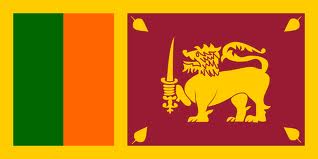
As I
have mentioned before, Harsha Lirne, my EF colleague and also a Member of the
Sri Lankan Parliament, of course asked me when I was coming if I wanted to
visit a Parliamentary session. I of course said “Sure, Why not”. I never mind
seeing how governments work in different Countries and places. So one morning, before a full day of meetings
and events, Harsha picked me up and took me to see the Parliament of Sri
Lanka. Let me back up by saying that I
when I first answered Harsha with “sure, why not”, that response meant exactly
what was said, which in my mind meant “if nothing else has been schedule that
is more interesting or a priority, I will visit Parliament. I want to include
this sentiment in this post because I have visited a couple of Parliamentary
sessions or two in my time, several in Africa and one or two in Brazil, and
they can sometimes be very boring, unable to understand due to language
barriers, and most members end up rambling on and on that a session can become
a moreso just less than better option to the snooze button. However,
it wasn’t until I met the “New” members of Parliament that I realized..”Oh,
these guys are different…this could be interesting”.
 The
first night that I came to town, Harsha introduced me to several of his friends
that included Parliamentary memebrs/leaders who were young, passionate,
outwardly ambitious, and very entrenched in making the Country better,
stronger, and a more vibrant destination and place to live. We were all about
the same age and this immediately intrigued me because although I have many
friends and colleagues who are young 30 year olds holding government office
positions and also passionate about politics and the politics that take place
within their districts, I just didn’t think I would find that in Sri Lanka of
all places! So the night went on, the
engagements were great, the discussion was interesting, the energy was alive
and comfortable, and by the time the night was over…..I was hooked. Sri
Lanka….who knew ;-)
The
first night that I came to town, Harsha introduced me to several of his friends
that included Parliamentary memebrs/leaders who were young, passionate,
outwardly ambitious, and very entrenched in making the Country better,
stronger, and a more vibrant destination and place to live. We were all about
the same age and this immediately intrigued me because although I have many
friends and colleagues who are young 30 year olds holding government office
positions and also passionate about politics and the politics that take place
within their districts, I just didn’t think I would find that in Sri Lanka of
all places! So the night went on, the
engagements were great, the discussion was interesting, the energy was alive
and comfortable, and by the time the night was over…..I was hooked. Sri
Lanka….who knew ;-)
So,
to speed back up to my visit to Parliament, I now had more of purpose to go.
When asked again if I wanted to attend, it was a resounding “YES”. I wanted to
see just what all of this endless dialogue, vibrato, private circle discussion
topics at late night hours, actually placed in its appropriate venue. So I went
and glad I did. First, just on
aesthetics the Parliament House is beautiful. An Asian design and openness to
the building , façade, and grounds, is regal, welcoming, striking, and actually
very feng shui.

After
arriving, I was swiftly escorted upstairs, through numerous security checks and
balances, and finally took a seat in the balcony, facing the Opposition side of
the government. At first, it was rather
quiet. Saw my friends, waved hands, and sat there not understanding a thing.
But then something happened, people starting getting up and talking and
speaking in Sinahalese, faster and faster and there were active retorts and comments
being thrown back and forth across the aisle. Well this was definitely not
unfamiliar. As everyone knows in the US, these types of active arguments and
heated discourse are very common, so at that point I began to read between the
language barriers and grasp what may be going on…..a legal debate. Now the
context was foreign, but the actions were not. It was very interesting. Good to
know that in other places around the world the bickering back and forth of
opposing ideologies and positions, take on the same tantrums as constantly seen
in my own back yard. Now in this case, I didn’t know who to liken the
administrations to, ie….what party is more like the US Republicans and which
party is more like the US democrats, but what I did know was that in that crowd
there were hard core facts…1) Not that many women are Sri Lankan Parliament
Leaders ( Maybe 8 or so, out of 50), 2) There are young and very interesting
leaders of note in the government, and 3) There is room for inclusion of
technology to bring a bit of modernization and “pizazz” to the process and
progression of the SL governing structures and bodies.
All
that being said, the visit was a success.
Glad I went and saw for myself what all the hub bub is about. And Harsha
was right, there is hub bub;-) Interest growing….
B
Dinner with the Sri Lankan Eisenhower Fellows!
 On
Monday night after a LONG day of meetings, the Eisenhower Fellows of Sri Lanka
got together and hosted me to a dinner so that I could meet everyone and they
could meet me. It was a lovely affair.
The head of the Sri Lanka Eisenhower Fellows is HD Gunawardena. Mr. Gunawardena
traveled as an Eisenhower Fellow in †he 1970s and remains one of the carriers
of the legacy and primary liasion between EF and SL. Mr. Gunawardena used to run and own a well
established shipping company in Sri Lanka. He currently owns and operates a
leading travel agency in SL called Helvanka Travels. After first meeting Mr. Gunawardena I could instantly
tell he why he was a prominent figure in Sri Lanka and the leader of the EF
group. He is a no-nonsense but very affable
man has clearly reached a level of high repute in SL circles and is now
enjoying his well deserved retirement but takes a passionate and serious stance
when it comes to matters of Eisenhower Fellowship.
On
Monday night after a LONG day of meetings, the Eisenhower Fellows of Sri Lanka
got together and hosted me to a dinner so that I could meet everyone and they
could meet me. It was a lovely affair.
The head of the Sri Lanka Eisenhower Fellows is HD Gunawardena. Mr. Gunawardena
traveled as an Eisenhower Fellow in †he 1970s and remains one of the carriers
of the legacy and primary liasion between EF and SL. Mr. Gunawardena used to run and own a well
established shipping company in Sri Lanka. He currently owns and operates a
leading travel agency in SL called Helvanka Travels. After first meeting Mr. Gunawardena I could instantly
tell he why he was a prominent figure in Sri Lanka and the leader of the EF
group. He is a no-nonsense but very affable
man has clearly reached a level of high repute in SL circles and is now
enjoying his well deserved retirement but takes a passionate and serious stance
when it comes to matters of Eisenhower Fellowship. 
 One
of the main topics of the evening was centered around the Eisenhower Fellowship
Conference to be held next September. I
found out that night that the SL Fellows have proposed to hold the Eisenhower
Fellowship Conference in Sri Lanka for 2012. “Wow”, I thought. “This could be
huge”. Should an event like this happen, this would be
amazing, Not only for what it will say
about Sri Lanka, its relationship with EF, and the increase in tourism beyond
Europe and Asia, that will inevitably occur by hosting a conference of this
magnitude, but if done well and supported, it will show that not only is the
Country truly serious about its bright and shinning future, but so is the South
East Asian region and the US.
One
of the main topics of the evening was centered around the Eisenhower Fellowship
Conference to be held next September. I
found out that night that the SL Fellows have proposed to hold the Eisenhower
Fellowship Conference in Sri Lanka for 2012. “Wow”, I thought. “This could be
huge”. Should an event like this happen, this would be
amazing, Not only for what it will say
about Sri Lanka, its relationship with EF, and the increase in tourism beyond
Europe and Asia, that will inevitably occur by hosting a conference of this
magnitude, but if done well and supported, it will show that not only is the
Country truly serious about its bright and shinning future, but so is the South
East Asian region and the US.  From
my knowledge, conferences take planning, coordination, partnerships,
sponsorships, etc… There are many moving pieces, organization is key, a good strong team of workers, planners, and
executors, makes all the difference. So
when I found out about this proposed plan of SL to lead the charge and step out front, I began
to believe that “yes, this is exactly what Sri Lanka needs at this
moment.” By hosting the conference this
could potentially hasten the national transition process, in of course a niched
way, but definitely will help to bring and usher in new partners or
perspectives to the table in its redevelopment.
From
my knowledge, conferences take planning, coordination, partnerships,
sponsorships, etc… There are many moving pieces, organization is key, a good strong team of workers, planners, and
executors, makes all the difference. So
when I found out about this proposed plan of SL to lead the charge and step out front, I began
to believe that “yes, this is exactly what Sri Lanka needs at this
moment.” By hosting the conference this
could potentially hasten the national transition process, in of course a niched
way, but definitely will help to bring and usher in new partners or
perspectives to the table in its redevelopment.
Of
course, when I heard that this was the goal….I immediately set my mind to be of
help in any way possible. Of course, my attendance will be a given, however,
ideas that are fresh, collaborative, and progressive, are in order to make this
conference a roaring success! “This is right alley”…I thought………ideas are
brimming galore. Excited!
Alright
then…..let’s go 2012!
Technology and Policy In Sri Lanka....
Information and Communication
Technology Agency of Sri Lanka http://www.icta.lk/
My
first meeting in Sri Lanka was a hit. I met with the team at ICTA which is a
private/public organization that provides telecom regulation and recommendations
to the Sri Lankan Ministry, creates technology focused public private
partnerships between businesses in Sri Lanka and business around the world, and
lastly fuels innovation in the Country by establishing funds for the creation
of technologies and various applications.
 I met
with Reshan Dewapura, Chief Executive Officer, Jayantha Fernando, Programme
Director and Legal Advisor, and Radley Dissanayake, Programme Manager. Reshan,
Jayantha, and Radley, all took special care of me and my proposed Eisenhower
objectives, but more importantly they took a very keen interest in the
meeting. They each laid out a very
detailed presentation and discussion with me about the telecommunications
landscape of Sri Lanka and what the Country was doing in regards to innovation,
and how, in their perspective, the telecommunications and IT sector in Sri
Lanka, is and will be a valuable alternative to the Indian powerhouse status
quo.
I met
with Reshan Dewapura, Chief Executive Officer, Jayantha Fernando, Programme
Director and Legal Advisor, and Radley Dissanayake, Programme Manager. Reshan,
Jayantha, and Radley, all took special care of me and my proposed Eisenhower
objectives, but more importantly they took a very keen interest in the
meeting. They each laid out a very
detailed presentation and discussion with me about the telecommunications
landscape of Sri Lanka and what the Country was doing in regards to innovation,
and how, in their perspective, the telecommunications and IT sector in Sri
Lanka, is and will be a valuable alternative to the Indian powerhouse status
quo.
Some
of what we spoke about was that Sri Lanka basically has 5 providers who offer a
majority of the services to the Sri Lankan marketplace. These providers are made up of mobile
providers, telecom providers, and government owned providers. Very little, if
any, hard wire providers are in the current marketplace. Like India, Sri Lanka leapfrogged technology
and went straight to wireless and mobile infrastructure platforms. Thus, most of its infrastructure is wireless/
mobile, thus giving the Country a “step ahead” to innovate and create a new and
ripe eco system made up of Sri Lankan technology development, initiatives,
partnerships, and creations.
ICTA
has been building the agency and recommending to the Country m-governance
solutions, SMS applications, and building funds to grow Sri Lankan technology
development companies and individual creators of apps and IT software. It will be an uphill journey, but ICTA is
very confident in its abilities to capture a market and offer the world
alternatives for business operations and service solutions. I am confident as
well.
DIALOG Sri Lanka http://www.dialog.lk/
Dialog
is one of Sri Lanka’s large mobile and satellite television providers. The
company’s CEO is Hans Wijayasuriya. Hans is considered as one of Sri Lanka’s
leading figures not only in technology, but in the general Sri Lankan business
and intellectual circles as well. Quiet as kept, he is also being considered as
a future Eisenhower Fellow and is on the short list of nominations to receive
the honor and travel to the USA.
I had
the pleasure of meeting Hans and we had, yet again, another very good
discussion about the Sri Lankan telecommunications landscape and what the
Country is doing to propel its once antiquated infrastructure, into a world
class destination of data service and access.
 In
Hans perspective, he totally believes in the “Bottom of the Pyramid” (BOP) (see
weblink) marketplace and has analyzed
this unique community in a way that I appreciated and helped shaped my own
beliefs about the best way to approach and serve this very relevant group of
consumers. Hans believes that the
ability to offer “life enhancing” content is the foundation to create a business
model for the BOP. “It’s not that they (
BOP) can’t pay..its that they do not want to pay”. Hans and I engaged in a fruitful conversation
about content and the development of a model to close the loop in offering ways
for the BOP to consume broadband and ultimately purchase the service as
well. For Dialog, this is a somewhat
easier for them, because they are a service provider. Which means Hans company is
firmly positioned as THE premier mobile provider thus giving Dialog the ability
to charge for services and include these charges in the monthly billing
statements. This may sound like an easy
feat, however, its all “in the method of payment. That makes the difference”,
states Hans.
In
Hans perspective, he totally believes in the “Bottom of the Pyramid” (BOP) (see
weblink) marketplace and has analyzed
this unique community in a way that I appreciated and helped shaped my own
beliefs about the best way to approach and serve this very relevant group of
consumers. Hans believes that the
ability to offer “life enhancing” content is the foundation to create a business
model for the BOP. “It’s not that they (
BOP) can’t pay..its that they do not want to pay”. Hans and I engaged in a fruitful conversation
about content and the development of a model to close the loop in offering ways
for the BOP to consume broadband and ultimately purchase the service as
well. For Dialog, this is a somewhat
easier for them, because they are a service provider. Which means Hans company is
firmly positioned as THE premier mobile provider thus giving Dialog the ability
to charge for services and include these charges in the monthly billing
statements. This may sound like an easy
feat, however, its all “in the method of payment. That makes the difference”,
states Hans.
In
addition, Dialog is beginning to also create mobile applications that are
social service oriented and are interesting and targeted enough to get the BOP
market to engage in mobile app purchases.
Interesting medical application along with television application
platforms and agriculture applications, are fueling the Dialog brand into an
entirely new stratosphere. Joint
ventures with application developers doesn’t hurt this progression as
well.
In
the end, Dialog is positioned to continue to hold its stance as Sri Lanka’s
number one go to service provider.
“Simple, cheap, delivery with purpose and applicability”, is what Hans
confirms, is the secret to the future growth of the company. “The facilitation of transaction that are
fast and reach every village, town, and city center, will also be the important
factor to building and growing the tele eco system in Sri Lanka”. I believe him. Renaissance in progress.
Lirne
Asia http://lirneasia.net/
I have been hearing about Lirne Asia all
throughout my travels and even beforehand from leading ICT executives and
technologists. Lirne Asia is a (get info
from website).

Rohan,
who has a resume that rivals any US FCC Commissioner or Chairman, is a wealth
of information. He has taught in the US at Ivy Leagues Universities, was once
the Director of the Sri Lankan Telecommunications agency, and is respected as
one of the leading experts on South East Asian ICT reform and thought.
Rohan,
like many others, believes that mobile is the future, particularly for Sri
Lanka due to the state of the infrastructure and the affordability that a wireless
and mobile network provides for the Country. “ You have to start thinking of
the BOP marketplace as people who just have irregular incomes….not that they
are poor”, stated Rohan. This comment resonated and was probably the most
poignant to come from our conversations. It’s true, irregular incomes is what
defines and should be the leading circumstance and factor when developing and
creating a BOP model that is effective and successful. He himself talks about the fact that he has
an irregular income, not because he is poor but mostly due to his methods of
getting paid. He mentioned hits because
everything that a company does to reach and prosper from low income
individuals, must keep this fact in mind.
Irregularity means that a company needs to be creative, adaptable, cut
unnecessary costs, and above be, be flexible in its approaches. “You have to look at every cost item and beat
it down”, retorted Rohan. “You have to, in order to survive”.
We
lastly engaged in discussion about some of the research he is working on with
the World Bank and other initiatives to fuel the mobile application models and
to produce social service applications that target and benefit the BOP
market. Mobile banking was a huge topic
of interest as well as the idea that one has to “close the gap of the money” as
it pertains to limiting the barriers of growth from the market and producing a
relevant model that will capitalize and benefit the people who it serves.
Thank
you Rohan. As expected, great insight and perspective from one the worlds best.
Sri Lanka proves itself once again.
Virtusa http://www.virtusa.com/


Virtusa http://www.virtusa.com/
Virtusa
is one of Sri Lanka’s largest companies that provide BPO services and
technology and software development to Multinationals or companies
overseas. The company was started by a
Sri Lankan from his mother’s garage and is now in revenue growth of over $100
Million. Very impressive.
Similar
to many of the companies I visited in India, Virtusa like Tech Mahindra or
InfoSys, is also an organization that provides a host of business services
offerings and proclaims to be the best in what they can deliver and will niche
themselves according to your business needs.

I
liked the conversation with Virtusa because it allowed me to see that Sri Lanka
had large MNP companies that, like many China and India, participate in the
global tech eco system. Until this meeting, I wasn’t sure that a company
existed such as this in the Country.
Virtusa is located in an old textile mill in Colombo. The employ thousands and thousands of people
and are growing at a tremendous rate. Their biggest customer is AETNA life
insurance.
One
of the most interesting business plans and offerings that I loved about Virtusa
is in regards to their social service activities and private / public
partnerships that they have with the government and with non profit organizations
to rebuild Sri Lanka as a Nation. As I
mentioned, Sri Lanka is undergoing a tremendous re-haul of their economy,
brand, politics, infrastructure, citizen trust, etc… Virtusa is playing a huge roll to transition
the Country and the people efficiently and expeditiously. They have several key corporate
responsibility programs that I found very impactful, one includes the Campus
Reach Initiative. The Campus Reach Initiative allows Virtusa to
partner with Educational Institutions and help develop curriculum, internship
programs, the professors, advise of academia, student mentoring, and engage in
knowledge sharing. Inevitably, the
strong ties to the school allow Virtusa to attract top talent immediately and
provide jobs to graduates, thus offering sustainability of this model and
progression of the Nation. In addition, Virtusa then offers awards and
scholarships to those who they see as top in their class this offering
educational full rides to those students who without help, could not afford to
attend University.
So
Virtusa was definitely a great visit. Again, I was treated with the upmost care
and attention and was very honored to have been shown a presentation by such a
respected and highly influential institution of Sri Lanka!
Etialsat http://www.etisalat.ae/index.jsp
My
last meeting in Sri Lanka was held with CEO of Etialsat, Dumindra Rathayake.
This was one of the best conversations I had while in Sri Lanka. Loved Mr.
Rathayake’s passion and understanding about the power and future of social
media, innovation, and the ability to spur the technology movement in Sri
Lanka.

Etialsat
is the largest telecommunications company in the UAE and has a market in Sri
Lanka, of which Dumindra is the CEO. Within the mobile space, they are not as
big as Dialog but definitely make an impact within the market.
Why I
loved Etialsat and meeting with Mr. Rathayake is that through his leadership of
the Sri Lankan subsidiary, he personally is progressing the use of content,
devices (tablet), and innovation by launching entertainment and educational
mobile applications niched to Etialsat users. Why is this special, because he is
the only provider launching these applications in all three languages spoken in
Sri Lanka, Tamil, Sinahlese, and English. THIS IS POWERFUL!! No other provider is doing this in the
Nation. Etialsat is the only operator
that has a tri lingual web page.
In
addition, he has launched a tablet using the Android device that will also be
available for use in all three Sri Lankan dialects. This table allows for more open and better
access to broadband in the Country. His applications are niched to Etialsat
users and because it is very affordable, it fits within the BOP model inherent
in Sri Lanka. In Sri Lanka, and actually
all over the world, the ability to communicate and have devices interact and
utilize local languages in KEY to spreading, organizing, and reaching the community,
users, etc..
What
Dumindra understands is that the user experience is matters most! Also, the
ability to have devices niched to the local languages is imperative for wide
dissemination of messages, services, and adoption. So if I was a parliament member that needed
to reach the masses, particularly youth and users of social media to galvanize,
organize, and mobilize, I would start having conversations with Etialsat and/or
purchase an device from the Company.
Lastly,
Etialsat is holding innovation conferences and forums all over Sri Lanka. Just
this past year he has held two and is preparing for another early 2012 with
Google representatives present to talk about technology and development in the
mobile application space. Already he has
a following of new Sri Lankan web developers hungry to get their products out
in the open market. I admire that Mr.
Rathayake is taking the lead to push the innovation boundaries and develop
young engineers in the Country. Not that
many private companies take on act such as this.
So Bravo
Duhmindra for having a vision and taking ownership of the moment!! Keep on leading and changing the landscape.
Many well wishes to stay ahead of the curve and create and cultivate a future
talent base for Sri Lanka.
Regards!
B
Subscribe to:
Posts (Atom)
Eisenhower Fellowships

Eisenhower Fellowships
Wilco Electronics, Inc.

Wilco Electronics, Inc.
Federal Communications Commission

Federal Communications Commission